
Guide · By the TX Torque Coaching Staff
How to increase pitching velocity, safely
Pitchers add velocity by getting stronger and more powerful, using the lower half and trunk efficiently, and staying healthy enough to keep training. Throwing harder through pain or overuse is not a velocity plan.
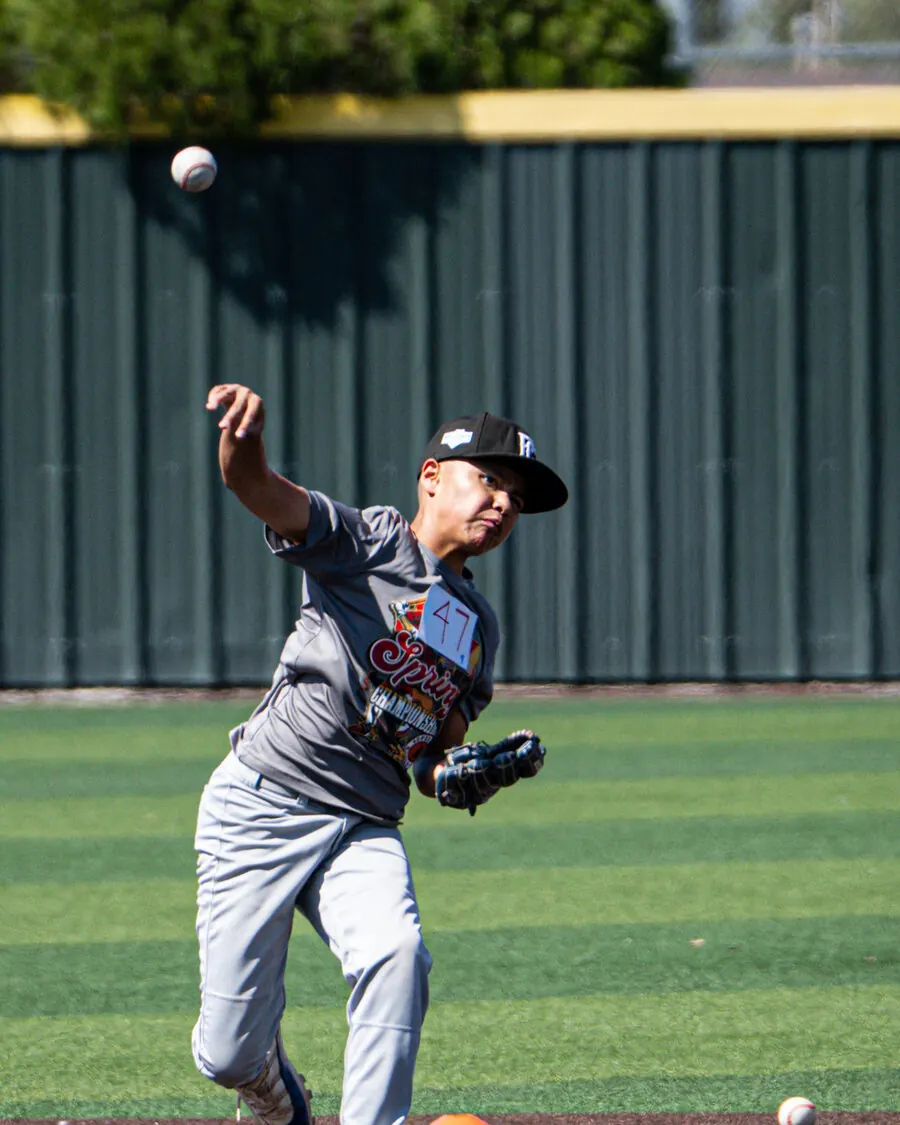
By the TX Torque Coaching Staff · Updated October 22, 2026
Every parent of a pitcher eventually asks the same question: how do we throw harder? It is a fair question. Velocity matters at every level, and college coaches look at it. But the way most young pitchers chase it, more throwing and more max effort, is the fastest way to stall or get hurt. Here is how we think about it.
Velocity comes from the whole body
The arm is the last link in a chain. Force starts from the ground, travels through the legs and hips, gets multiplied by the rotation of the trunk, and is finally delivered by the arm. A pitcher who throws "all arm" is asking the smallest link to do the most work. That caps velocity and puts stress on the shoulder and elbow.
When we watch a pitcher, we look at how well he uses that chain:
- Lower half: does he drive and stride with intent, or does he just fall toward the plate?
- Hip and shoulder separation: do the hips start rotating before the shoulders? That stretch is where a lot of velocity is created.
- Stable front side: does the front leg firm up so the body can rotate over it, or does it collapse and leak energy?
- Direction: is everything moving toward the target, or is energy flying off to the side?
Get stronger and more powerful
You cannot throw with force you do not have. For most young pitchers the biggest velocity gains come from simply becoming a stronger, more athletic person. That means age-appropriate strength training for the legs, hips and trunk, plus power work that teaches the body to produce force fast: jumps, sprints and rotational medicine ball throws.
This is why strength and power are the first two steps of the Torque Method. What we build in the weight room shows up on the mound, and the radar shows whether it is working. Read more about our strength and conditioning.
Clean up the mechanics, do not rebuild them
Good mechanics are efficient mechanics. The goal is not to make every pitcher look the same. The goal is to remove the leaks that cost velocity and add stress. Small, specific changes, one at a time, usually beat a full rebuild. A coach who has pitched at a high level can tell you which change matters most for your pitcher right now and which can wait.
Respect the workload
A pitcher who is hurt or always sore is not developing. Protecting the arm is part of the velocity plan, not separate from it:
- Follow pitch count and rest guidelines for your pitcher's age. MLB and USA Baseball publish them through the Pitch Smart program, and they are a good baseline.
- Take real time off from throwing during the year. Youth pitchers do not need to pitch competitively twelve months a year.
- Do not pitch on multiple teams at the same time without someone tracking the total.
- Never pitch through arm pain. Soreness after effort is one thing. Pain in the elbow or shoulder is a reason to stop and get it checked.
- Be careful with max effort and weighted ball programs for young players. They are tools, and like any tool they need to fit the athlete's age, strength and history, with a coach supervising.
Measure it
If you do not measure velocity, you are guessing. Measuring regularly tells you whether the plan is working and keeps everyone honest. At Torque we use TrackMan to track pitch velocity and spin rate, so progress is visible over weeks and months, not just on one good day.
Keep expectations realistic. Velocity tends to move in steps as a player grows and gets stronger. A season of steady strength work, cleaner mechanics and healthy throwing will usually do more than any shortcut.
Common mistakes we see
- Throwing more bullpens to "build arm strength" without a plan for recovery.
- Copying a pro pitcher's delivery without the strength to support it.
- Chasing velocity before the pitcher can throw strikes. Command still wins games.
- Ignoring the lower half and trying to throw harder with the arm alone.
- Skipping sleep and food. Young athletes cannot get stronger without both.
A simple plan for this month
- Get a baseline velocity reading.
- Add two age-appropriate strength and power sessions a week.
- Pick one mechanical priority with a coach and work only on that.
- Track every outing and respect rest days.
- Measure again in four to six weeks.
What realistic progress looks like
Parents often ask how much velocity a pitcher can gain in a season. There is no honest single number. A player who is still growing, starting a real strength program for the first time and cleaning up an obvious leak in his delivery can move a lot. A player who is already strong and efficient will move more slowly. What matters is the trend over months, measured the same way each time, and a pitcher who stays healthy through the whole process.
Velocity also has to stay usable. A pitcher who gains speed but loses the strike zone has not really improved. That is why we track command alongside velocity and why mechanical changes come one at a time.
How we do it at Torque
Our pitching program is led by Justin Maese, a 3rd round pick in the 2015 MLB Draft who pitched nine years in pro ball, with Gabriel Aguilar, who pitched a decade professionally and also coaches strength and conditioning. Pitchers train on a dedicated lane with a mound and see their numbers on every throw. See pitching lessons, or book a free trial and we will take a look at your pitcher.
Your first class is free.
Fridays and Saturdays, year-round. No deposit, no commitment.